
What Are the Main Parts of an Electric Car? Electric vehicles (EVs) continue to revolutionize the automotive world, and understanding how these cars work helps us appreciate their innovative nature. Unlike traditional gasoline-powered vehicles, electric cars are powered by electricity stored in batteries. This difference means they have a unique set of electric car parts. These components work together to provide a quiet, smooth, and eco-friendly driving experience.
Let’s explore the key electric car parts that make an EV run—from the powerful battery to the sleek motor.
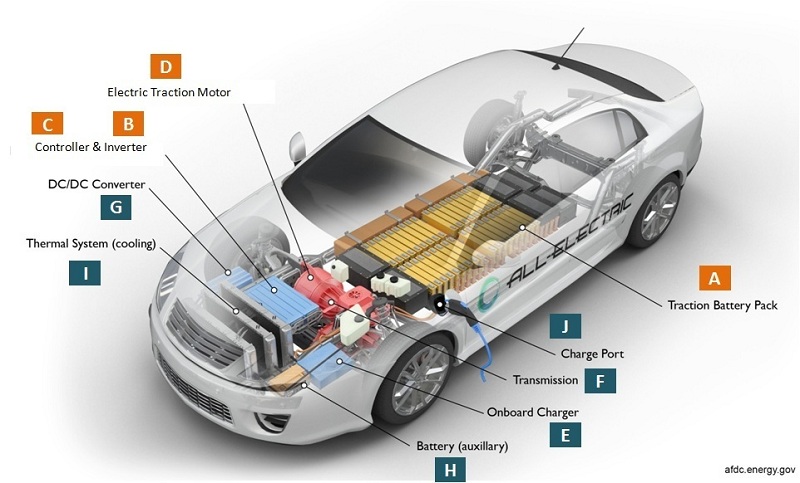
1. The Battery Pack
The battery pack lies at the heart of every electric car. It stores the energy that powers the vehicle. Typically, these packs contain several lithium-ion cells, which are both lightweight and energy-dense.
Key Features:
- Capacity: Measured in kilowatt-hours (kWh), battery capacity determines the vehicle’s driving range.
- Charging: EVs charge through home chargers or public stations, depending on the model and charger type.
- Battery Management System (BMS): This system ensures the battery operates efficiently and prevents overheating.
Function:
The battery powers the electric motor. When plugged into a charger, it stores electricity for later use. The BMS manages the charge to keep the battery in top condition, increasing its lifespan.
2. The Electric Motor
The electric car parts that turn electricity into mechanical energy are found in the electric motor. This motor actually drives the car, making it one of the most crucial parts.
Key Features:
- Magnetic Field: The motor uses electricity to create a magnetic field, which causes the rotor to spin and move the car.
- Torque: Electric motors provide instant torque, enabling quick acceleration.
- Regenerative Braking: The motor can reverse its function during braking to send energy back to the battery.
Function:
The motor uses a simple rotor and stator system to generate motion. Unlike internal combustion engines (ICEs), which rely on a complex system of pistons and fuel injection, the electric motor operates with fewer moving parts. This simplicity results in reduced maintenance needs.
3. The Inverter
The inverter is a vital electric car part. It converts the DC (direct current) power from the battery into AC (alternating current) power that the motor can use.
Key Features:
- DC to AC Conversion: The inverter turns the electrical power from the battery into usable AC for the motor.
- Regenerative Braking: It helps return energy to the battery during braking by converting the motor’s reverse energy into electrical energy.
- Efficiency: Modern inverters are highly efficient, ensuring the maximum amount of energy reaches the motor.
Function:
Without the inverter, the EV’s motor wouldn’t function. It ensures the electric motor receives the proper type of electrical current to power the car.
4. The Charging System
Another essential group of electric car parts is the charging system. This system enables the battery to recharge efficiently. Key components include the charging port and the onboard charging unit (OBC).
Key Features:
- Charging Port: This is where the car plugs into a charger, with different types of connectors for various regions and vehicles.
- Onboard Charger (OBC): This unit regulates the flow of electricity into the battery to ensure safe charging.
- DC Fast Charging: Some EVs are compatible with DC fast chargers, which charge the battery much quicker than traditional AC charging.
Function:
The charging system is crucial for keeping the battery powered. Fast-charging technologies like DC fast charging have helped make EVs more convenient for long-distance travel by reducing charging time.
5. Power Electronics
Power electronics include several electric car parts that manage the flow of electricity throughout the vehicle. These components ensure that energy is efficiently distributed between the battery, motor, and other systems.
Key Features:
- Power Control Unit (PCU): This unit controls the electricity between the motor and the battery.
- Voltage Conversion: Power electronics adjust voltage levels for different systems, ensuring each part gets the proper energy.
- Cooling: Some power electronics include cooling systems to prevent overheating.
Function:
Power electronics manage the energy in an electric vehicle, ensuring all components, from the motor to the lights, operate efficiently.
6. Thermal Management System
The thermal management system is another key electric car part. This system keeps the battery, motor, and other electrical parts at the right temperature.
Key Features:
- Cooling Systems: These can be liquid or air-based systems that maintain safe temperatures for the battery and motor.
- Heating Systems: In cold weather, the system ensures the battery stays warm enough to operate efficiently.
- Temperature Sensors: These sensors monitor temperatures and adjust cooling or heating as necessary.
Function:
Overheating can damage critical components like the battery. The thermal management system keeps temperatures under control, maximizing the vehicle’s efficiency and lifespan.
7. Transmission
Unlike traditional cars, most electric vehicles don’t require a multi-speed transmission. Instead, they use a single-speed gearbox that ensures smooth and efficient driving.
Key Features:
- Single-Speed Gearbox: Most electric vehicles use this system because the electric motor’s torque is constant, eliminating the need for multiple gears.
- Efficiency: A single-speed transmission minimizes energy loss, enhancing the vehicle’s efficiency.
Function:
The transmission transmits power from the motor to the wheels. The single-speed gearbox ensures smooth acceleration without the need for gear shifts.
8. Regenerative Braking System
Regenerative braking is one of the standout features of electric vehicles, allowing them to capture and reuse braking energy.
Key Features:
- Energy Recovery: When braking, the motor switches to reverse, capturing kinetic energy and turning it into electrical energy.
- Battery Recharging: This recovered energy is sent back to the battery to extend the vehicle’s range.
- Less Wear on Brakes: Since regenerative braking reduces reliance on traditional brakes, brake pads last longer.
Function:
Regenerative braking captures energy that would otherwise be wasted, making the car more energy-efficient. This system helps maximize the range and performance of the electric vehicle.
Electric vehicles consist of a variety of electric car parts that all contribute to their quiet, efficient, and eco-friendly operation. From the battery pack that stores energy to the electric motor that drives the car, each component plays a critical role. As EV technology advances, these components continue to improve, making electric cars an increasingly popular choice for environmentally conscious drivers.
Understanding these key electric car parts provides a clearer picture of how EVs work. Whether it’s the electric motor’s torque or the battery’s impressive capacity, each part contributes to the vehicle’s performance and sustainability. With continued innovation, the future of electric vehicles is bright, offering a cleaner, greener alternative to traditional gasoline-powered cars.


More Stories
Finding the Perfect Used Car Dealer
Your Guide to Affordable Used Cars
Used Cars for Every Budget